The Rise of the AI Economy: How Technology Is Reshaping Production and Jobs
The Rise of the AI Economy: How Technology Is Reshaping Production and Jobs
Artificial intelligence is no longer just a helpful tool on our devices. It has become an economic force reshaping how goods are produced and services are delivered. The rise of the AI economy raises fundamental questions for governments, companies and workers: will machines replace people, or will they create jobs that did not exist before? The answer is more complex than it seems.
What Is the AI Economy?
The AI economy covers all economic activity driven by machine learning and intelligent data processing in production, distribution and decision-making. From smart factories to digital service platforms, artificial intelligence has become the backbone of entire industries.
The core pillars of the new economy
- Data: the fuel that powers AI systems.
- Computing power: the infrastructure needed to train and run models.
- Algorithms: the engines that turn data into decisions.
- Human expertise: the engineers, scientists and designers who build these systems.
How Is Technology Being Applied to Production?
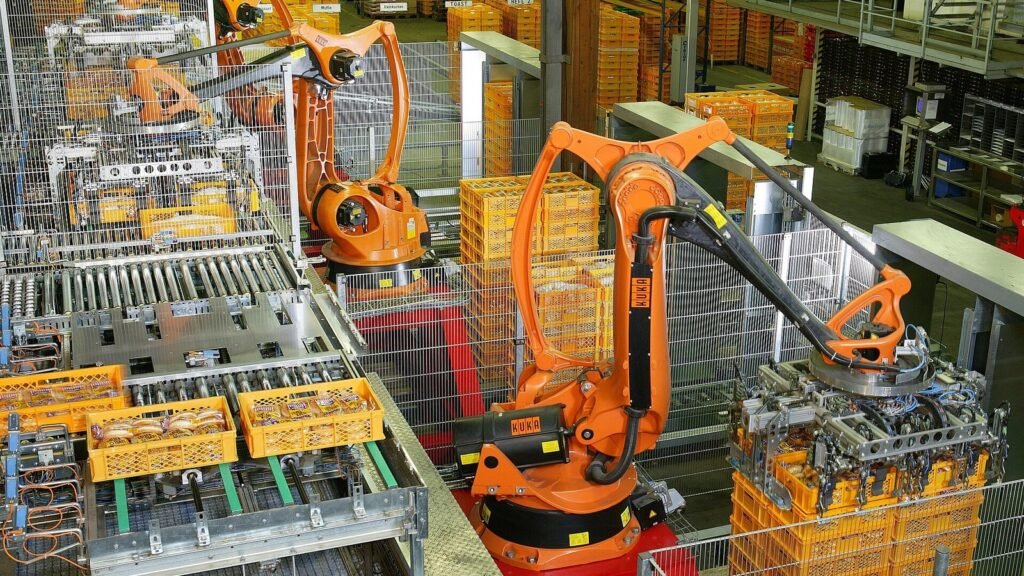
The adoption of intelligent technology has radically transformed industrial production. Factories no longer rely only on human labor on assembly lines. They now depend on self-monitoring systems, IoT devices and AI-powered robots.
Practical examples in manufacturing
- Predictive maintenance: anticipating machine failures before they happen to reduce downtime.
- Quality control: inspecting products with smart cameras more accurately than the human eye.
- Supply chain management: optimizing material flow and reducing waste.
- Mass customization: producing personalized products at affordable prices.
The Impact of the New Economy on the Labor Market
The AI economy is reshaping the labor market. While some routine jobs disappear, new roles requiring completely different skills emerge. The change is not only about the number of jobs but their nature.
Affected jobs
- Declining roles: repetitive manual work, data entry and routine processes.
- Growing roles: machine learning engineers, data specialists, technology ethicists.
- Brand-new roles: model trainers, prompt engineers, algorithmic bias analysts.
Investments in Artificial Intelligence
Governments and companies are spending enormous sums on this technology. Capital is flowing toward data centers, processing chips and large language models. Artificial intelligence has become a major investment sector attracting global tech funds.
Sectors attracting the largest investment
- Data centers and cloud infrastructure.
- Chip and specialized processor manufacturing.
- Foundation model companies and their applications.
- Healthcare, education and financial services.
Table: Expected Changes in Production and Jobs
| Area | Current state | Expected state |
|---|---|---|
| Industrial production | Partial automation | Nearly autonomous factories |
| Quality | Manual inspection | Automated smart inspection |
| Routine jobs | Manual | AI-assisted |
| Required skills | Traditional | Digital and technical |
Opportunities and Challenges for Businesses
Companies embracing the AI economy have a huge opportunity to improve efficiency, but they also face challenges around cost, data and ethics. Smart businesses start with small experiments and scale what proves successful.
The Role of Governments and Policy in the New Economy
Governments play a central role in shaping the AI economy. Investment in digital infrastructure, updating educational curricula and establishing clear regulatory frameworks all determine whether countries will benefit from the coming revolution or fall behind.
Priorities for smart policy
- Funding AI research and encouraging local innovation.
- Launching training programs to reskill workers in affected sectors.
- Setting clear rules for data protection and privacy.
- Supporting small businesses in adopting smart technologies at affordable cost.
How Can Workers Prepare for the Future?
Regardless of your current job, there are practical steps that raise your chances in the new labor market:
- Learn the basics: understand how AI tools work and what they are used for.
- Develop data skills: analyzing data and understanding metrics is becoming an essential skill.
- Use intelligent tools daily: automation is a partner, not an enemy.
- Focus on human skills: creativity, leadership and problem-solving remain a human advantage.
- Learn for life: fast adaptation is the most valuable asset in an era of rapid change.
Conclusion
The AI economy represents a structural shift in how we produce, work and invest. Success in this phase does not mean replacing humans with machines; it means redesigning work to combine machine capabilities with human intelligence. Countries, companies and individuals who build their skills early will hold a position of strength in the new economy.
Reliable Sources
FAQ
Will AI replace jobs entirely?
No, it is reshaping them. Some routine jobs disappear while new ones requiring technical skills and creative thinking appear.
How can small businesses prepare for the new economy?
By starting with ready-made AI tools, investing in employee training, and using technology for specific measurable tasks.
What is the most important skill in the new labor market?
The ability to work with data, use intelligent tools, solve complex problems and commit to continuous learning.